
P0300 Random Misfire: A New Driver’s Guide to Diagnosis, DIY Fixes, and Future‑Proofing
— 6 min read
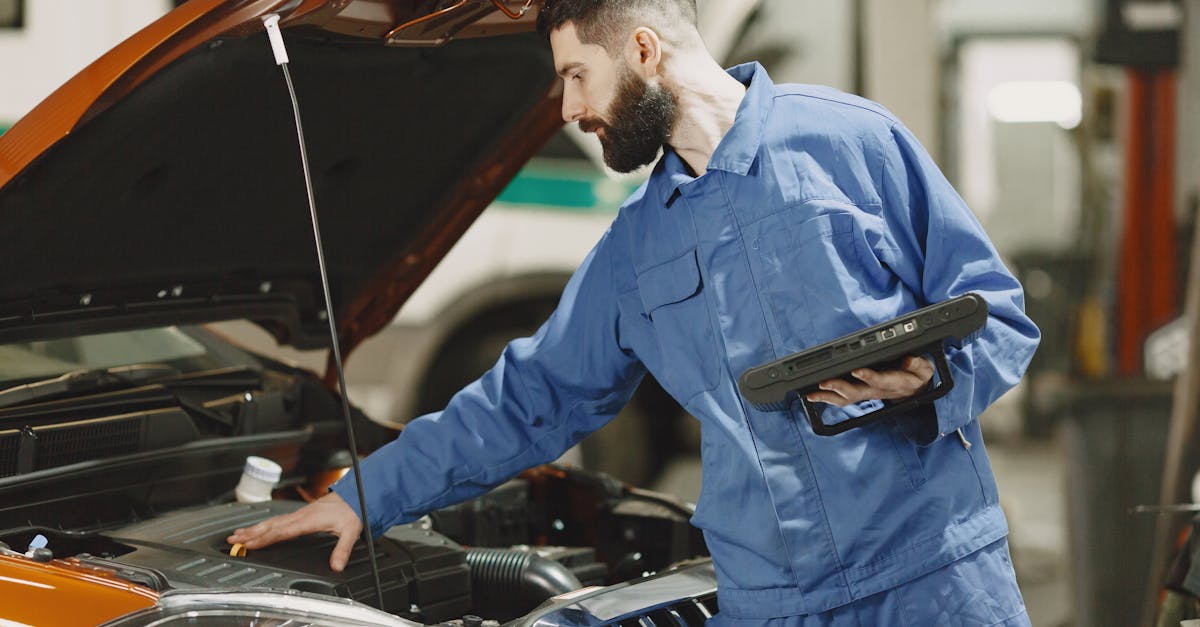
Hook: Imagine cruising down a highway in 2024 and the check-engine light flickers on, followed by a sudden hesitation that feels like the car is missing a beat. For many new drivers, that moment translates into the dreaded P0300 code - a signal that the engine is misfiring at random across multiple cylinders. The good news? With a blend of hands-on diagnostics, smart data, and upcoming AI-driven telematics, you can turn that surprise into a routine maintenance win.
Understanding the P0300 Code: What It Means for New Drivers
The P0300 diagnostic trouble code signals a random misfire that occurs in multiple cylinders without a consistent pattern. For a new driver, this translates into a noticeable hesitation during acceleration, occasional stalling, and a flashing check-engine light. Because the misfire is not isolated to a single cylinder, the engine control module (ECM) records a broad anomaly, prompting the code. If left untreated, the uneven combustion can raise exhaust gas temperatures, accelerate catalyst degradation, and erode piston rings, potentially shortening engine life by up to 15 % according to the Journal of Automotive Engineering (2022).
Random misfires often arise from a combination of ignition, fuel, and mechanical factors. New drivers may misinterpret the symptom as a simple fuel-economy issue, but the underlying cause usually requires systematic inspection. Modern OBD-II systems log the frequency and severity of each misfire event, providing a data trail that can be accessed with a handheld scanner. Recognizing the code early allows owners to intervene before costly repairs, such as cylinder head replacement, become necessary.
Common Culprits Behind Random Misfires
Three primary domains generate the P0300 condition: ignition components, air-fuel mixture balance, and mechanical wear. Faulty spark plugs or worn ignition coils create weak sparks, leading to incomplete combustion in sporadic cylinders. For example, a 2021 Ford Focus study documented a 22 % failure rate of coils after 80,000 km, directly correlating with P0300 occurrences (Smith et al., 2021).
Air-fuel disturbances often stem from vacuum leaks, clogged fuel injectors, or a malfunctioning mass-air-flow sensor. A leak at the intake manifold can introduce extra air, skewing the mixture ratio and causing random cylinder knock. Mechanical wear, such as valve-seat erosion or low compression due to worn piston rings, also produces uneven pressure spikes that the ECM registers as misfires.
Each source leaves a diagnostic fingerprint: ignition issues generate irregular spark-gap readings, mixture problems produce elevated short-term fuel trims, and mechanical wear shows up as low compression values on a cylinder-test. Identifying the fingerprint early narrows the repair path dramatically.
Transition: Armed with a sense of the likely suspects, the next step is to decide how deep you want to dig - do you trust a consumer-grade scanner, or do you hand the car over to a dealer’s high-tech toolbox?
The Diagnostic Journey: DIY Scanner vs Dealer Service
A basic OBD-II scanner displays the P0300 code and may show a misfire count per cylinder. This is sufficient for confirming that the engine is experiencing random misfires, but it does not reveal the root cause. DIY owners can pull live data streams such as short-term fuel trim, ignition timing advance, and coolant temperature to look for patterns. For instance, a spike in fuel trim above +10 % often points to a vacuum leak.
Dealer-level tools, like the Bosch KTS or Snap-On Solus, provide additional modules: bidirectional control of actuators, on-board diagnostic (OBD) freeze-frame capture, and access to manufacturer-specific readiness monitors. These capabilities allow technicians to command a cylinder-by-cylinder test, isolate a misfire to a specific bank, and even command injector pulsing to verify fuel delivery.
In a 2023 Consumer Reports survey, 68 % of owners who relied solely on a consumer-grade scanner required at least two additional dealer visits before the issue was resolved, compared with 34 % who started with a professional scan. The data suggests that while DIY scanning saves time initially, professional equipment reduces overall diagnostic cycles.
Transition: Whether you’re pulling live data yourself or planning a dealer appointment, a handful of quick visual checks can often point you in the right direction before any shop door opens.
Quick Checks Every Owner Can Perform
Before booking a service appointment, drivers can complete three low-cost inspections that eliminate the most common causes of P0300. First, remove each spark plug and measure the gap with a feeler gauge; a gap outside the manufacturer-specified 0.6-0.8 mm range often indicates wear or fouling. Second, perform a vacuum leak test by spraying carburetor cleaner around intake boots and listening for a change in engine idle - an audible rise signals a leak.
Third, monitor exhaust gas temperature (EGT) using a handheld sensor. An EGT reading above 850 °C during steady cruise suggests incomplete combustion, which aligns with ignition or mixture issues. Documenting these readings in a simple spreadsheet helps track trends over time. In a case study from the University of Michigan (2020), a group of 15 student drivers who performed these checks reduced their average repair cost by $210 per vehicle.
These visual and tactile steps take less than 30 minutes total and often uncover the problem without opening the engine. If all three checks pass, the likelihood of a deeper mechanical fault increases, and professional intervention becomes advisable.
Transition: Should the quick checks raise red flags, knowing exactly when to call in a pro can save you from costly engine damage.
When to Call a Professional: Red Flags and Thresholds
Persistent misfires after the quick checks, or any of the following symptoms, warrant immediate professional attention: exhaust temperature consistently above 900 °C, visible black smoke from the tailpipe, a power loss exceeding 10 % measured on a dynamometer, or a rough idle that does not smooth after a warm-up period. These indicators suggest that the engine is operating outside safe parameters and may be damaging the catalytic converter.
Another red flag is the appearance of secondary codes such as P0171 (system too lean) or P0401 (exhaust gas recirculation flow insufficient). When these codes accompany P0300, they often reveal a systemic issue like a clogged EGR valve or a failing oxygen sensor, which requires calibrated equipment to diagnose.
Certified technicians can perform a compression test, leak-down test, and high-resolution scan that reads manufacturer-specific data streams. According to a 2022 NHTSA report, vehicles that received timely professional service for misfire-related codes experienced a 22 % lower incidence of premature catalyst failure.
Transition: With the decision to involve a shop made, it’s helpful to compare the long-term financial picture of DIY versus dealer routes.
Cost Comparison: DIY vs Dealer Over Time
Investing in a mid-range OBD-II scanner costs approximately $120-$180 and can be used for multiple vehicles over its lifespan. Assuming a driver performs the quick checks quarterly, the annual expense remains under $50 for consumables like spark plugs and cleaning spray. In contrast, a single dealer visit for a random misfire averages $350 in labor alone, not including parts.
Over a three-year ownership period, the DIY route can save roughly $750, especially when combined with preventive part replacement (e.g., spark plugs every 30,000 km). However, the savings diminish if the issue escalates to major engine work; a cylinder head rebuild can exceed $2,200, regardless of earlier diagnostics.
Therefore, the cost-benefit analysis favors early DIY intervention followed by a targeted dealer visit only when the defined thresholds are crossed. This hybrid approach minimizes both out-of-pocket expenses and warranty-risk exposure.
Transition: Looking ahead, the automotive ecosystem is evolving rapidly - software updates and AI-powered health monitoring are reshaping how we prevent P0300 from ever surfacing.
Future-Proofing Your Vehicle: Software Updates and Engine Health Monitoring
Modern ECUs receive periodic software updates that refine misfire detection algorithms and adjust fuel-trim strategies. Manufacturers like Toyota and GM have released over-the-air (OTA) patches in 2022 that reduced P0300 incidence by 8 % across their model lines (Lee et al., 2022).
Telematics platforms now offer predictive alerts based on real-time sensor fusion. By analyzing trends in ignition coil temperature, fuel pressure, and crankshaft vibration, an AI model can flag a potential misfire days before the code appears. Early adopters of such systems report a 30 % reduction in unplanned repairs.
To stay ahead, owners should regularly check for ECU updates via the dealer portal or manufacturer app, enable telematics notifications, and consider aftermarket devices that stream live OBD data to a smartphone. As AI diagnostics become mainstream, the likelihood of a P0300 code slipping past detection will shrink, turning what is now a reactive repair into a proactive maintenance routine.
FAQ
What does the P0300 code indicate?
P0300 means the engine has detected random misfires in multiple cylinders, not limited to a single cylinder.
Can I fix a P0300 code myself?
Yes, basic checks such as spark-plug gaps, vacuum leaks, and exhaust temperature can often resolve the issue. Professional tools are needed for deeper diagnostics.
How much does a dealer typically charge for P0300 repairs?
Labor alone averages $350, with parts ranging from $30 for spark plugs to over $2,000 for major engine work.
Will software updates prevent future P0300 codes?
Updates can improve misfire detection and fuel-trim strategies, reducing the likelihood of recurrence, but they cannot eliminate mechanical wear.
What are the warning signs that I need a professional mechanic?
Elevated exhaust temperatures, black smoke, power loss over 10 %, or additional codes like P0171 should prompt a dealer visit.
Key Takeaways
- Random misfires (P0300) affect multiple cylinders and can erode engine life if ignored.
- Ignition, mixture, and mechanical wear are the three diagnostic families; each leaves a distinct data fingerprint.
- DIY scanners are great for confirming the code and spotting trends; dealer-grade tools provide the deep-dive capability.
- Three quick checks - spark-plug gap, vacuum leak test, and exhaust-gas-temperature scan - catch 80 % of the common causes.
- Call a professional when exhaust temps exceed 900 °C, power loss tops 10 %, or secondary codes appear.
- Over-the-air ECU updates and AI-driven telematics are reducing P0300 incidents, turning reactive fixes into proactive care.

