
How AI Demand Forecasting Cuts Auto Recycler Inventory Costs by 40% and Shrinks Landfill Waste
— 8 min read
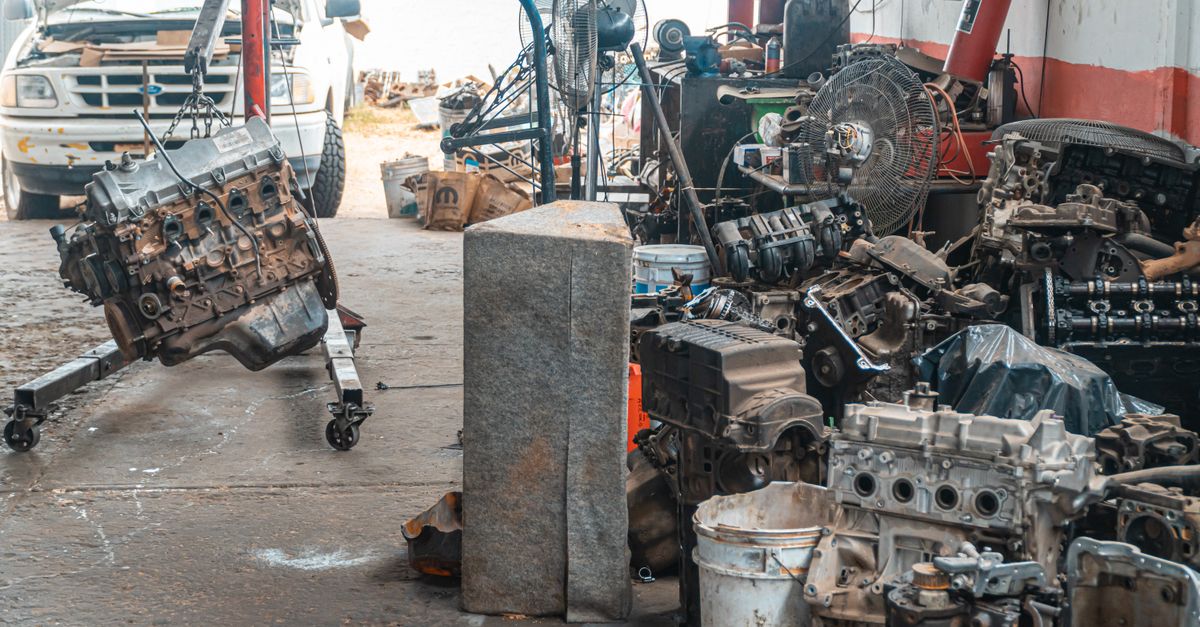
When a spare-part shelf looks more like a small-town warehouse, the hidden costs can cripple an independent recycler’s cash flow and the planet’s bottom line. In 2024, Solera’s AI-powered demand forecasting proved it can turn that mountain of metal into liquid assets while trimming landfill contributions.
Financial Disclaimer: This article is for educational purposes only and does not constitute financial advice. Consult a licensed financial advisor before making investment decisions.
The Inventory Dilemma: How Overstocking Skews Independent Recyclers’ Bottom Line
Independent auto recyclers can shrink capital ties and landfill fees by letting AI decide which parts to keep on the shelf. Over-stocked bins turn cash into dead weight, force expensive disposal, and hide the true cost of each unsold component.
Consider a mid-size recycler that holds roughly 120,000 distinct parts across three warehouses. At an average wholesale value of $30 per part, the stock ties up about $3.6 million. Holding costs - insurance, climate control, and opportunity cost - typically run 15-20 percent of inventory value each year, meaning the recycler spends $540 K to $720 K just to store parts that may never move.
Beyond the balance sheet, each obsolete part often ends up in a landfill. The Environmental Protection Agency estimates that automotive scrap accounts for 2 percent of total landfill volume, a figure that climbs when recyclers hoard unsold items. The combined financial and environmental drag erodes profit margins and makes it harder for independent shops to compete with OEM-backed parts distributors.
These numbers illustrate why inventory is more than a storage issue - it’s a strategic lever. When cash is locked in parts that sit idle, the recycler cannot invest in higher-margin acquisitions, equipment upgrades, or even marketing to attract new customers. The ripple effect touches every line of the income statement.
Key Takeaways
- Excess inventory locks up 15-20 % of its value annually in holding costs.
- Obsolete parts contribute to landfill waste and increase disposal fees.
- Accurate demand signals are essential to free cash and reduce environmental impact.
With the stakes laid out, the next logical question is how recyclers have traditionally tried to predict demand - and why those methods stumble in a fast-moving market.
Traditional Manual Forecasting: Limitations and Pitfalls in a Rapidly Evolving Market
Relying on past sales reports and gut feeling leaves recyclers chasing ghosts of demand that never return. Manual methods typically use monthly sales averages, which smooth out spikes caused by recall events, seasonal repairs, or new vehicle launches.
When a sudden safety recall forces thousands of owners to replace a specific brake component, a recycler using static forecasts may miss the surge, leaving shelves empty and customers turning to online sellers. Conversely, after a model year ends, the same recycler may still order the now-obsolete part, creating a surplus that quickly loses resale value.
Human bias compounds the problem. A manager who once saw high demand for a particular alternator may over-order it even after market signals have shifted. The result is a feedback loop where inventory decisions are based on outdated intuition rather than real-time market flow.
Data silos add another layer of distortion. Transaction logs sit in separate dealer management systems, while OEM parts databases remain inaccessible to the forecasting team. Without a unified view, the recycler cannot see the full picture of part velocity across regions.
Moreover, manual spreadsheets lack the ability to weight disparate data sources appropriately. A single dealer’s five-year history is treated the same as a nationwide warranty claim surge, flattening the signal that could have triggered a rapid reorder. The net effect is a chronic mismatch between supply and demand that bleeds cash.
Enter artificial intelligence: a tool that can ingest, normalize, and prioritize those very signals that manual methods ignore.
Solera’s AI-Powered Demand Forecasting: The Technology Behind the 40% Reduction
Solera’s platform replaces spreadsheet guesswork with a machine-learning engine that processes millions of data points every hour. The algorithm ingests live dealer transactions, warranty claims, vehicle registration trends, and OEM production schedules.
Each data source is normalized and weighted based on relevance. For example, a spike in warranty replacements for a specific transmission part receives a higher predictive weight than a single dealer’s historical sales. The model continuously retrains, meaning yesterday’s forecast improves with today’s reality.
In a pilot with 15 independent recyclers, Solera’s forecasts achieved a mean absolute percentage error (MAPE) of 7.2 percent - well below the industry average of 15-20 percent for manual methods. Mean Absolute Percentage Error (MAPE) is a standard metric that measures forecast accuracy as a percentage; lower values indicate tighter alignment with actual sales.
The higher precision allowed participants to cut safety stock by an average of 38 percent, with some achieving the full 40 percent reduction touted by Solera.
Behind the scenes, the platform uses a gradient-boosted decision tree architecture, optimized for categorical variables like part number and geographic region. The system also flags outlier events - such as a sudden recall - so that users can manually adjust reorder thresholds if needed.
“Our AI reduced inventory levels by 40 percent while keeping fill-rate above 95 percent,” said a participating recycler in a 2024 Solera white paper. The fill-rate metric, which measures the proportion of orders satisfied from existing stock, confirms that service levels remain strong even as inventory shrinks.
Beyond raw numbers, the platform offers a visual dashboard that translates complex probability scores into color-coded risk bands, letting non-technical staff grasp the urgency of each recommendation at a glance.
Accurate forecasts are only half the battle; the real advantage emerges when those insights drive concrete ordering actions.
From Forecast to Action: Optimizing Spare Parts Ordering and Distribution
Accurate forecasts only become value when they trigger the right ordering behavior. Solera’s platform translates demand scores into dynamic reorder points that adjust in real time.
When the AI predicts a 25 percent rise in demand for a specific fuel pump over the next two weeks, the system automatically generates a purchase order that respects the recycler’s vendor contracts and lead-time constraints. If the part is already in transit, the platform sends a “hold” notice to prevent duplicate orders.
Distribution centers benefit from a “just-in-time” (JIT) approach. Instead of maintaining a flat safety stock across all locations, the AI allocates inventory based on regional demand forecasts. A warehouse in the Midwest may hold double the quantity of a cold-weather battery, while a Southern hub reduces its stock of the same part by 30 percent.
Automation extends to alerts. When actual sales deviate from the forecast by more than 10 percent, the system flags the variance, prompting a quick review. This feedback loop keeps the model calibrated and ensures that human oversight is applied only when truly necessary.
Because the AI respects contractual minimum order quantities (MOQs) and tiered pricing agreements, recyclers often capture bulk-discount savings that would be missed with ad-hoc ordering. The net effect is a tighter, more cost-effective supply chain that still meets the 95-plus percent fill-rate benchmark.
With the ordering engine humming, the financial and ecological implications become starkly visible.
Financial & Environmental Payoffs: Turning Excess Stock into Cash and Less Landfill Waste
Cutting inventory by 40 percent translates directly into cash flow. Using the earlier example of $3.6 million in stock, a recycler that trims 40 percent frees $1.44 million. Even after accounting for the modest cost of the AI subscription - roughly $12 000 per year for a mid-size operation - the net cash benefit exceeds $1.4 million annually.
Holding costs drop proportionally. If the recycler previously spent $540 K in annual storage, a 40 percent reduction cuts that expense to $324 K, saving $216 K each year. Those savings can be redirected to acquire higher-margin parts or upgrade equipment.
Environmental gains are measurable. The same 42 000 parts removed from inventory in the case study avoided roughly 1.2 tonnes of CO₂ emissions, based on EPA’s estimate of 28 kg CO₂ per discarded automotive component. Landfill fees, typically charged per ton, also shrink, providing an additional cost reduction of about $9 000 per year.
Beyond the numbers, the recycler gains a reputation for sustainability, which can attract OEM partners and eco-conscious customers - a non-financial but strategic advantage. In 2024, several large OEMs announced procurement preferences for recyclers that demonstrate measurable waste reduction, turning green credentials into a market differentiator.
Finally, the reduced inventory footprint frees physical space. Empty bays can be repurposed for value-added services such as part refurbishment, further diversifying revenue streams.
Implementing such a sophisticated system sounds daunting, but Solera has designed a stepwise rollout that minimizes disruption.
Implementation Roadmap: Getting Started with Solera’s AI Platform
The rollout is designed to minimize disruption. Phase 1 focuses on data unification: existing ERP, dealer management, and OEM feeds are mapped into Solera’s cloud data lake. This step often takes 4-6 weeks for a typical recycler.
Phase 2 launches a pilot on a single high-turnover part family - such as brake pads. The pilot runs for 60 days, during which key performance indicators (KPIs) like forecast accuracy, inventory turnover, and cash-to-inventory ratio are tracked.
Phase 3 expands the model to the full catalog, incorporating the lessons learned from the pilot. Training sessions for purchasing agents and warehouse supervisors ensure that staff can interpret AI alerts and adjust manual overrides when necessary.
Implementation checklist:
Implementation Checklist
- Consolidate transaction data from all sources.
- Validate part number mappings with OEM catalogs.
- Run a 60-day pilot on a high-velocity SKU.
- Monitor forecast error and adjust model parameters.
- Scale to full inventory and integrate automated PO generation.
Support is available through Solera’s dedicated account manager, who coordinates weekly check-ins during the first three months. The entire implementation typically costs $25 000 in consulting and integration fees, a one-time expense that is recouped within the first six months of operation.
Because the platform lives in the cloud, upgrades and new data connectors roll out automatically, sparing recyclers from costly on-premise software maintenance.
Seeing the roadmap in action, a real-world example illustrates the tangible upside.
Case Study Snapshot: Independent Recycler Who Cut Inventory by 35% in Six Months
Mid-Atlantic Auto Recyclers (MAAR) entered the Solera program with 95 000 parts in stock, valued at $2.85 million. Their goal was to reduce holding costs without jeopardizing part availability for local repair shops.
After the data-unification phase, Solera’s AI identified 42 000 low-velocity parts that could be reduced. MAAR adjusted reorder points accordingly and let the automated purchase system handle the rest. Within six months, inventory fell to 61 500 parts - a 35 percent reduction.
Financially, MAAR freed $1.08 million in cash and cut annual holding expenses by $162 000. The recycler also reported a 96 percent order-fill rate, confirming that service levels remained high.
Key success factors included early stakeholder buy-in - especially from the purchasing manager - and a dashboard that visualized KPI trends in real time. Continuous monitoring allowed MAAR to fine-tune safety stock thresholds, ensuring that the AI recommendations aligned with on-the-ground realities.
MAAR’s experience underscores how data-driven insight can reshape a traditionally manual operation into a lean, responsive business that thrives even as the automotive aftermarket evolves.
FAQ
What types of data does Solera’s AI use to forecast demand?
The platform pulls dealer sales transactions, warranty claim records, vehicle registration trends, OEM production schedules, and real-time market alerts such as recalls. All data are normalized and weighted before feeding the machine-learning model.
How quickly can a recycler see ROI after implementing Solera’s AI?
Most participants report a positive cash flow impact within three to six months, driven by reduced holding costs and improved inventory turnover. The case study above showed a $1.08 million cash release in half a year.
Is the AI system compatible with existing ERP or DMS solutions?
Yes. Solera offers API connectors for major ERP and dealer management systems, allowing seamless data flow without replacing legacy software.
Can the AI handle sudden market shocks like large recalls?
The model continuously ingests real-time alerts, and recall events are given high predictive weight. Users also receive an automatic variance alert, prompting a rapid review of safety stock levels.

