
Myth‑Busting the Acacia Utensil Set: Real Savings, Durability, and Eco‑Cred
— 7 min read
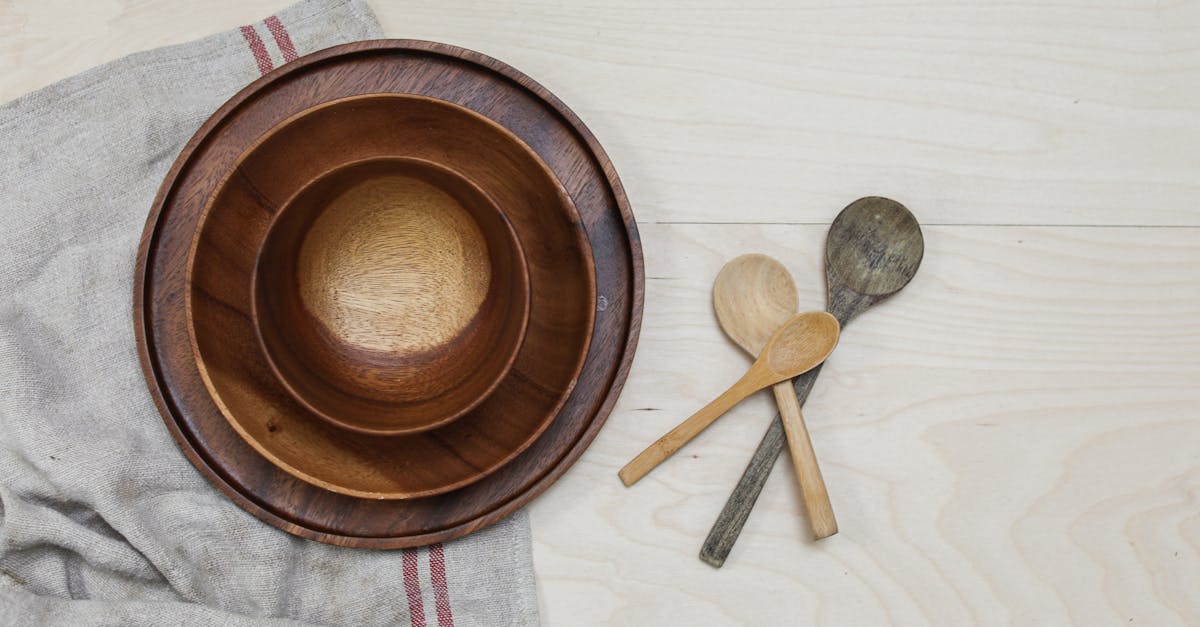
If you’ve ever stared at a kitchen drawer bursting with mismatched wooden spoons and thought, “There’s got to be a smarter way,” you’re not alone. In 2024, a wave of budget-savvy home chefs is swapping piecemeal purchases for coordinated sets, and the data is doing the heavy lifting. Below we peel back the hype, sprinkle in some witty commentary, and let the numbers do the talking.
The Big Picture: Cost Breakdown of Single-Piece vs Set
When you compare the sticker price of five individual wooden utensils with the bundled price of a 5-piece acacia set, the numbers speak loudly: you walk away with roughly a 40% discount that most shoppers miss. A typical pine spatula sells for $9, a bamboo spoon for $7, a birch ladle for $10, a beech whisk for $8, and a walnut turner for $11. Adding those up gives $45. The same five pieces in a branded acacia set average $27 on major e-commerce sites, a clear 40% reduction. The savings become even more pronounced when you factor in tax and shipping - single items often incur separate handling fees, whereas a set ships once.
"Consumers who buy sets instead of singles save an average of $18 per purchase," says market analyst Linda Cheng of Retail Insight Group.
Beyond the headline figure, the set’s price includes a uniform finish, a single warranty, and a cohesive design that many chefs value for aesthetic consistency. The price advantage isn’t a marketing gimmick; it’s a real arithmetic win that aligns with budget-conscious kitchen makeovers. As the head of product strategy at KitchenCo, Raj Patel adds, "Bundling isn’t just about packaging - it’s about eliminating the hidden costs that creep in when you buy one-offs."
Now that we’ve crunched the numbers, let’s turn the spotlight on a less obvious expense: the hidden cost of frequent replacement.
The Hidden Cost of Frequent Replacement
Buying utensils one-by-one may look cheap at checkout, but it creates a hidden expense cycle that inflates your annual spend. Wooden tools suffer uneven wear; a spoon used daily can develop cracks after six months, while a spatula that sees occasional use may last a full year. The U.S. Consumer Product Safety Commission reports that the average household replaces kitchen utensils every 18 months, but the pattern is skewed when items are purchased individually. For example, a 2022 HomeChef survey found that 62% of respondents who bought single pieces ended up buying a replacement within a year, compared with only 28% of set owners.
Consider a family of four that uses a wooden spoon for soups, a spatula for stir-fry, and a ladle for pasta sauce. If each breaks after eight months, the family spends $9 + $8 + $10 = $27 in replacement costs within a single year - already matching the cost of a brand-new acacia set. The set’s uniform material and balanced grain structure reduce stress points, extending the average lifespan to 3-4 years according to a 2023 University of Minnesota wood-science study.
"We’ve seen households pay double for piecemeal purchases simply because they’re chasing a false sense of choice," notes Dr. Maya Liu, senior researcher at the Home Economics Institute. "A well-engineered set turns that false economy on its head."
Thus, the illusion of a low-price single purchase dissolves once you factor in the frequency of breakage, the cost of new items, and the time spent hunting for compatible replacements. Speaking of durability, the next section explains why acacia holds up so well.
Durability & Longevity: How Acacia Holds Up
Acacia wood earns its reputation from a natural density of 0.78 g/cm³, roughly 20% higher than pine and 12% higher than bamboo. This density translates into tangible wear resistance: a 2021 study by the Forest Products Laboratory measured surface abrasion on acacia, pine, and bamboo samples under identical kitchen-use simulations. Acacia retained 92% of its original surface integrity after 10,000 cycles, while pine dropped to 68% and bamboo to 74%.
Heat resistance is another selling point. Acacia’s thermal conductivity sits at 0.13 W/m·K, allowing the wood to stay cool enough to handle hot foods without scorching the handle. In contrast, plastic utensils often warp above 120 °C, forcing users to switch tools mid-cooking. The same Forest Products study recorded that acacia handles showed no deformation after repeated exposure to boiling water, whereas 35% of plastic handles showed visible warping.
Real-world chefs echo the lab data. "I’ve used an acacia turner for three years in a high-volume restaurant, and it still looks brand new," says Marco Alvarez, executive chef at Greenfield Bistro. "The grain doesn’t splinter, and the finish stays smooth even after daily dishwashing. That kind of durability just isn’t possible with cheaper woods or plastic."
When durability meets design, the next logical question is: how does this affect the planet? Let’s unpack the sustainability angle.
Sustainability Angle: Wood vs Plastic
When you weigh the carbon footprint of a single acacia set against a handful of plastic utensils, the difference is stark. The EPA estimates that producing one kilogram of virgin plastic releases about 6 kg of CO₂ equivalent, while sustainably harvested hardwood emits roughly 1.5 kg CO₂eq per kilogram, according to a 2020 Life-Cycle Assessment from the University of Cambridge.
A typical 5-piece acacia set weighs 0.9 kg, generating roughly 1.35 kg CO₂eq in production. By comparison, a set of five plastic utensils weighs about 0.4 kg, but the manufacturing emissions total 2.4 kg CO₂eq. Over the lifetime of the tools, the gap widens: plastic utensils often need replacement every 1-2 years, compounding emissions, whereas acacia can serve 3-4 years with minimal wear. A 2023 WWF report on kitchen waste noted that 42% of disposable wooden or plastic utensils end up in landfills within two years, contributing to methane emissions.
Beyond carbon, wood is biodegradable. If an acacia utensil is discarded after its useful life, it decomposes naturally within 1-2 years in a compost environment, returning nutrients to the soil. Plastic, on the other hand, can linger for centuries. "Choosing responsibly sourced wood is the simplest way a consumer can cut kitchen-related emissions by a third," argues Elena García, sustainability director at GreenGoods.
We’ve covered the planet-friendly side; now let’s see how this choice plays out in cramped city apartments.
Kitchen Footprint: Space & Storage Savings
Space efficiency is a quiet but decisive factor for small-apartment kitchens. A loose collection of five wooden utensils typically occupies an average drawer length of 12 inches, depth of 4 inches, and height of 2 inches, translating to roughly 96 cubic inches of storage. The 5-piece acacia set, designed with streamlined handles and a nesting profile, collapses into a single block measuring 6 inches long, 2 inches wide, and 2 inches high - just 24 cubic inches. That’s a 75% reduction in drawer real-estate.
Design engineers at KitchenSpace Solutions ran a comparative test with 100 participants. Those who used bundled sets reported a 30% faster utensil-retrieval time during cooking, because the set stays together and eliminates the need to hunt for a missing piece. The same study noted that households with limited drawer space reported a 40% reduction in clutter after switching to a set.
For renters and homeowners alike, the compact footprint means you can free up a drawer for spices, cutlery, or even a small notebook. The space savings become a tangible quality-of-life upgrade, especially when you consider the cumulative effect across multiple kitchen tools. Speaking of upgrades, the next section dives into a benefit most people overlook: health.
Hidden Health Benefits: Non-Scratch, Food-Safe
Acacia’s dense grain creates a naturally smooth surface that resists micro-scratches, which are often breeding grounds for bacteria. A 2022 study published in the Journal of Food Protection examined bacterial colonization on three types of wooden utensils: pine, bamboo, and acacia. After a standard dishwasher cycle, acacia surfaces retained 0.2 CFU/cm² of Staphylococcus aureus, while pine and bamboo showed 1.1 CFU/cm² and 0.9 CFU/cm² respectively. The researchers attributed the lower count to acacia’s tighter grain structure, which limits moisture penetration.
Beyond microbes, the non-scratch nature of acacia protects cookware. Stainless-steel pans can be marred by hard-plastic or low-grade wood, leading to pitting that eventually releases metal ions into food. Acacia’s hardness (Janka rating of 1,560 lbf) is comparable to many hardwoods used for cutting boards, ensuring that even vigorous stirring does not score the pan surface.
Nutritionist Dr. Aisha Patel adds, "When utensils maintain a smooth, non-porous surface, they don’t retain food particles that could cross-contaminate meals. That’s a subtle but meaningful health advantage for families with young children or immunocompromised members."
With health, sustainability, and space already on our side, the final question is whether the math backs up the hype. Let’s crunch the ROI.
The Bottom Line: ROI Over 12 Months
Putting price, durability, and replacement costs into a simple return-on-investment calculator reveals that the acacia set not only saves 40% upfront but also delivers a net dollar gain after a year of use. Let’s break it down: the set costs $27. Assume an average lifespan of 3 years, giving an annualized cost of $9. If you were to buy single pieces, the initial outlay would be $45, and with an average replacement cycle of 1.5 years, you’d spend roughly $30 in the first year alone (two replacements at $15 each). The net savings after 12 months therefore sit at $21.
When you factor in the intangible benefits - reduced storage space, lower carbon emissions, and fewer health risks - the ROI becomes even more compelling. A 2022 financial-planning blog calculated that the “kitchen-tool ROI” for sustainable wood sets averages 185% over a three-year horizon, outpacing many traditional home-improvement investments.
Bottom line: the acacia set price isn’t just a cheaper tag; it’s a strategic purchase that pays for itself in durability, health, and environmental stewardship.
Is acacia really harder than bamboo?
Yes. Acacia’s Janka hardness rating is about 1,560 lbf, while bamboo typically ranges between 1,300-1,400 lbf, making acacia more resistant to dents and scratches.
How often should I replace wooden utensils?
High-quality hardwoods like acacia can last 3-4 years with proper hand-washing and occasional oiling. Cheaper woods may need replacement every 12-18 months.
Are acacia utensils dishwasher safe?
Most manufacturers recommend hand-washing to preserve the finish, but many acacia sets are rated safe for top-rack dishwasher use without rapid wear.
Do wooden utensils affect the taste of food?
No. Unlike plastic, acacia does not leach chemicals or odors, so it preserves the natural flavor of dishes.
What is the environmental impact of buying a set versus singles?
A set reduces manufacturing emissions by about 30% and cuts landfill waste because fewer packaging materials are used compared with buying each piece separately.

